

Energi Media journalism in video, audio, and essays
YouTube Channel: Video energy news
Substack Essays: Thoughtful Energy Journalism
Energi Talks Audio Podcast
Website: Energy news
For months, Canadians have been debating whether the country needs another major oil pipeline to the West Coast. Advocates argue that a new line would allow Canada to diversify its export markets beyond the United States and send more crude to Asia. Critics point to the enormous cost. The Trans Mountain expansion cost taxpayers roughly $35 billion. A new one-million-barrel-per-day pipeline could require tens of billions more.
But there is another question that receives far less attention. What if Canada could move significantly more oil through the pipelines it already has?
That is the argument made by engineer Bill Eadie, CEO of Eadie Technology Inc. Instead of focusing solely on building new export infrastructure, Eadie argues that Canada should first examine ways to make better use of the infrastructure already in the ground.
The problem begins with bitumen itself.
Raw bitumen is so thick and viscous (like peanut butter) that it cannot be shipped through a pipeline on its own. Producers solve that problem by blending it with a light hydrocarbon known as diluent. The result is diluted bitumen, or dilbit, which flows well enough to meet pipeline specifications.
The drawback is that roughly 30 per cent of every barrel shipped is diluent rather than saleable bitumen. In practical terms, that means a significant portion of Canada’s pipeline network is being used to move a product that ultimately must be separated and recycled rather than consumed.
Eadie’s solution is partial upgrading.
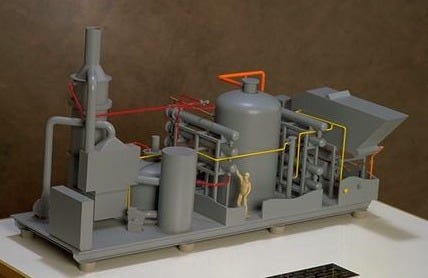
Using a modular processing system located near the production site, bitumen is treated before entering the pipeline. The goal is to reduce viscosity enough that little or no diluent is required.
If successful, the approach would increase the volume of actual oil that can move through existing pipelines while simultaneously improving the quality and value of the product.
The concept is not new. Alberta governments, industry groups, researchers, and producers have discussed partial upgrading for years. Several companies have developed competing technologies, and studies have suggested that upgrading can increase the value of bitumen while reducing transportation costs. Yet commercial deployment has remained limited, in part because oil and gas companies tend to be cautious adopters of new technologies that could affect large-scale operations.
As Canada looks for ways to expand market access, improve competitiveness, and reduce infrastructure costs, the debate over partial upgrading may be returning at exactly the right moment.
The question is whether greater efficiency can deliver some of the benefits of a new pipeline without requiring Canadians to pay for another one.


